

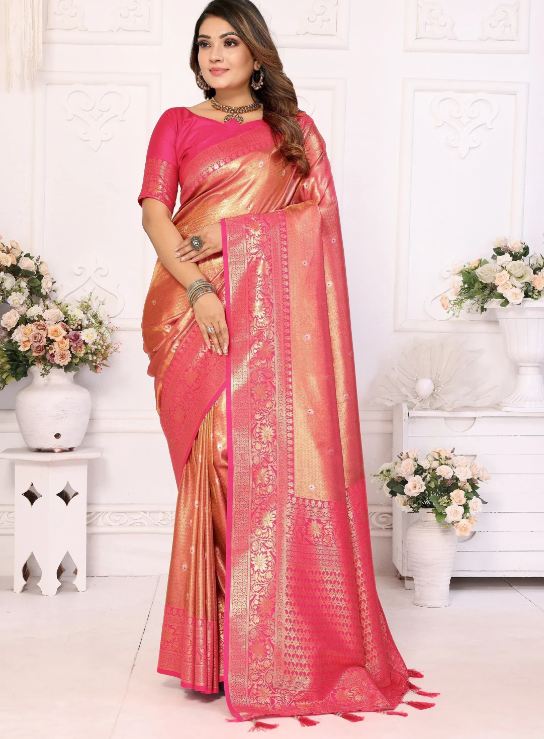
Some traditional garments remain favorites because their beauty does not depend entirely on changing trends. A Banarasi saree is one such classic, known for its rich fabric, detailed weaving, and graceful appearance. It continues finding a place in festive wardrobes because it feels special without losing the cultural character associated with traditional Indian dressing.
The charm of this saree also comes from its versatility. It can look regal at a wedding, elegant at a family celebration, or beautifully understated at a festive gathering. Different colors, borders, motifs, and blouse styles allow women to create very different appearances while wearing a garment with a familiar traditional foundation.
What Makes Banarasi Weaving So Distinctive
The first thing that sets these sarees apart is their detailed weaving. Traditional motifs, intricate borders, and metallic-looking patterns create visual richness across the fabric. Depending on the design, the saree can appear heavily ornate or surprisingly refined, making it suitable for women with different preferences.
Another appealing feature is the way the fabric catches light while moving. This quality gives the saree a naturally luxurious appearance without requiring excessive embellishment. A carefully woven piece can therefore make a strong impression through craftsmanship alone, especially during weddings and formal festive occasions.
Choosing Colors That Suit the Occasion
Color plays a major role in determining how traditional a saree feels. Deep red, wine, emerald, royal blue, and purple often create a dramatic appearance for weddings and evening celebrations. Softer shades, meanwhile, can give the same traditional silhouette a lighter and more contemporary personality.
The occasion can help narrow down the choices. Richer colors generally work beautifully for grand ceremonies, while muted tones can feel more appropriate for daytime events or smaller family gatherings. Skin tone, jewelry, and personal preference should also influence the final decision rather than following a particular color trend unthinkingly.
-
Choose deeper shades for grand evening functions.
-
Pastel tones suit lighter daytime celebrations.
-
Metallic borders add richness without extra layers.
-
Neutral shades allow greater accessory flexibility.
Finding a Style That Feels Current
Traditional clothing does not have to look old-fashioned. A contemporary blouse, minimal jewelry, or unexpected color combination can give a classic saree a completely different character. This balance allows women to enjoy heritage-inspired clothing while still dressing according to their present-day fashion preferences.
The wider saree market also keeps introducing fresh variations in color and styling. A latest saree collection may feature modern shades, lighter fabrics, or updated border treatments while retaining familiar weaving influences. These changes give traditional wear enough variety to remain interesting for younger shoppers as well as those who already appreciate classic designs.
Choose Pairings That Change the Entire Appearance
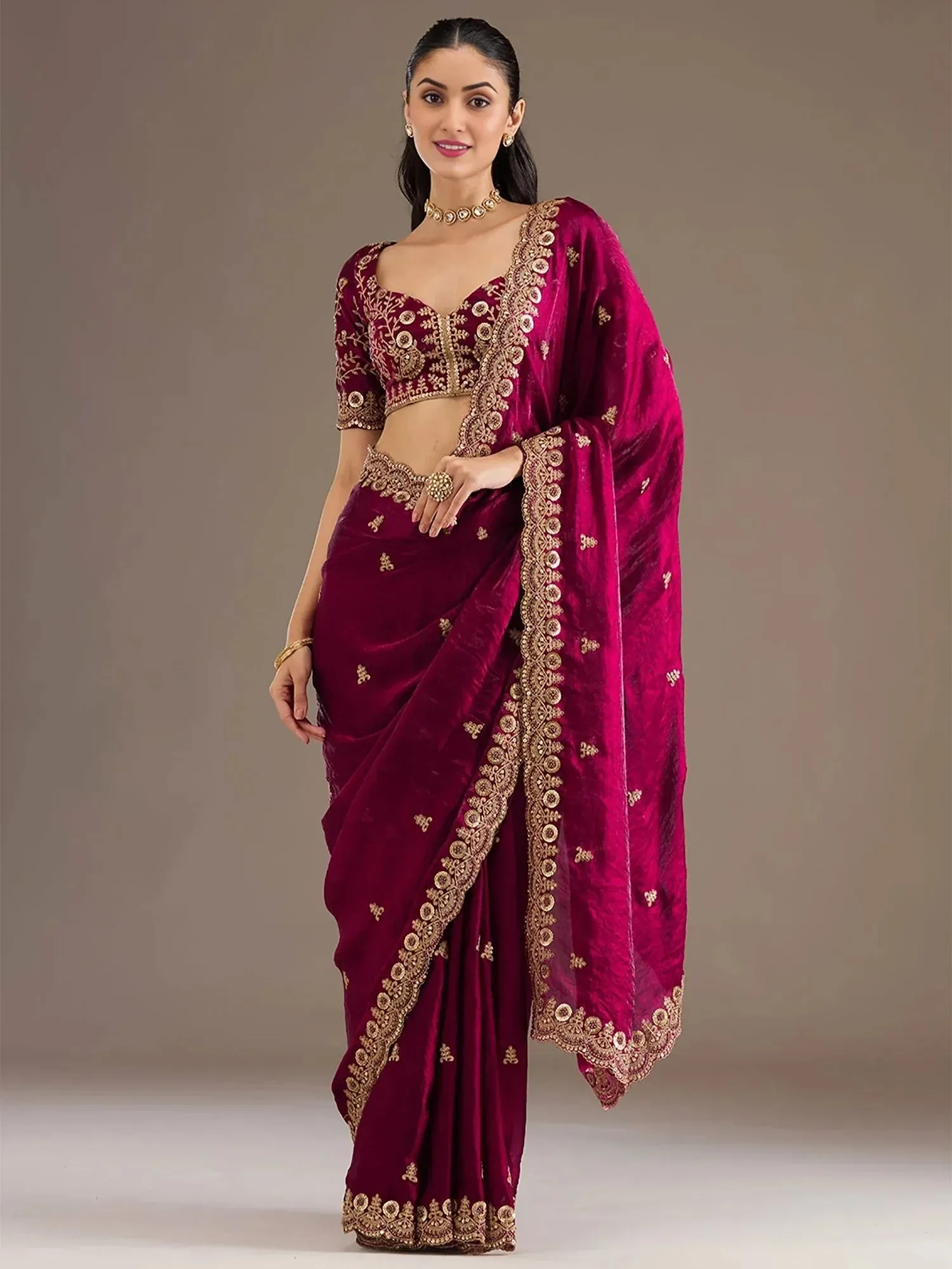
The blouse can completely change the personality of a traditional saree. A heavily embroidered blouse creates a grand wedding look, while a plain silk blouse can make the same saree appear much more understated. Neckline, sleeve length, fabric, and color should all work together rather than being selected separately.
Modern styling also gives women plenty of room to experiment without losing the saree’s traditional character. A contrasting blouse can add freshness, while a matching shade creates a more polished appearance. Choosing jewelry according to the blouse detailing prevents the final outfit from looking crowded.
Accessories Should Complement Rather Than Compete
Jewelry is an important part of festive saree styling, but more accessories do not necessarily create a better appearance. Traditional earrings, bangles, a necklace, and a small clutch may be enough to complete an elaborate saree. If the fabric already has detailed motifs, simpler accessories can create better balance.
Footwear and hairstyles deserve similar attention. A neatly styled bun works beautifully with statement earrings, while softer waves can create a relaxed appearance for daytime occasions. Choosing each element according to the saree’s detailing helps create a complete look that feels intentional without becoming overly elaborate.
-
Match jewelry with the saree’s overall richness.
-
Choose footwear that remains comfortable for hours.
-
Keep hairstyles suitable for the neckline.
-
Use handbags that complement rather than dominate.
Conclusion
The lasting appeal of a Banarasi saree comes from its ability to feel traditional while adapting easily to changing personal styles. Different blouse designs, accessories, hairstyles, and draping techniques can make one saree appear completely different each time it is worn, giving it value beyond a single celebration.
For many women, that versatility makes traditional clothing more meaningful. A carefully chosen saree can accompany weddings, festivals, family ceremonies, and important gatherings without feeling out of place. Its craftsmanship provides the foundation, while individual styling adds personality. That combination explains why this timeless favorite continues to hold a special place in festive wardrobes.